Keynote Speakers
Gergely Neu
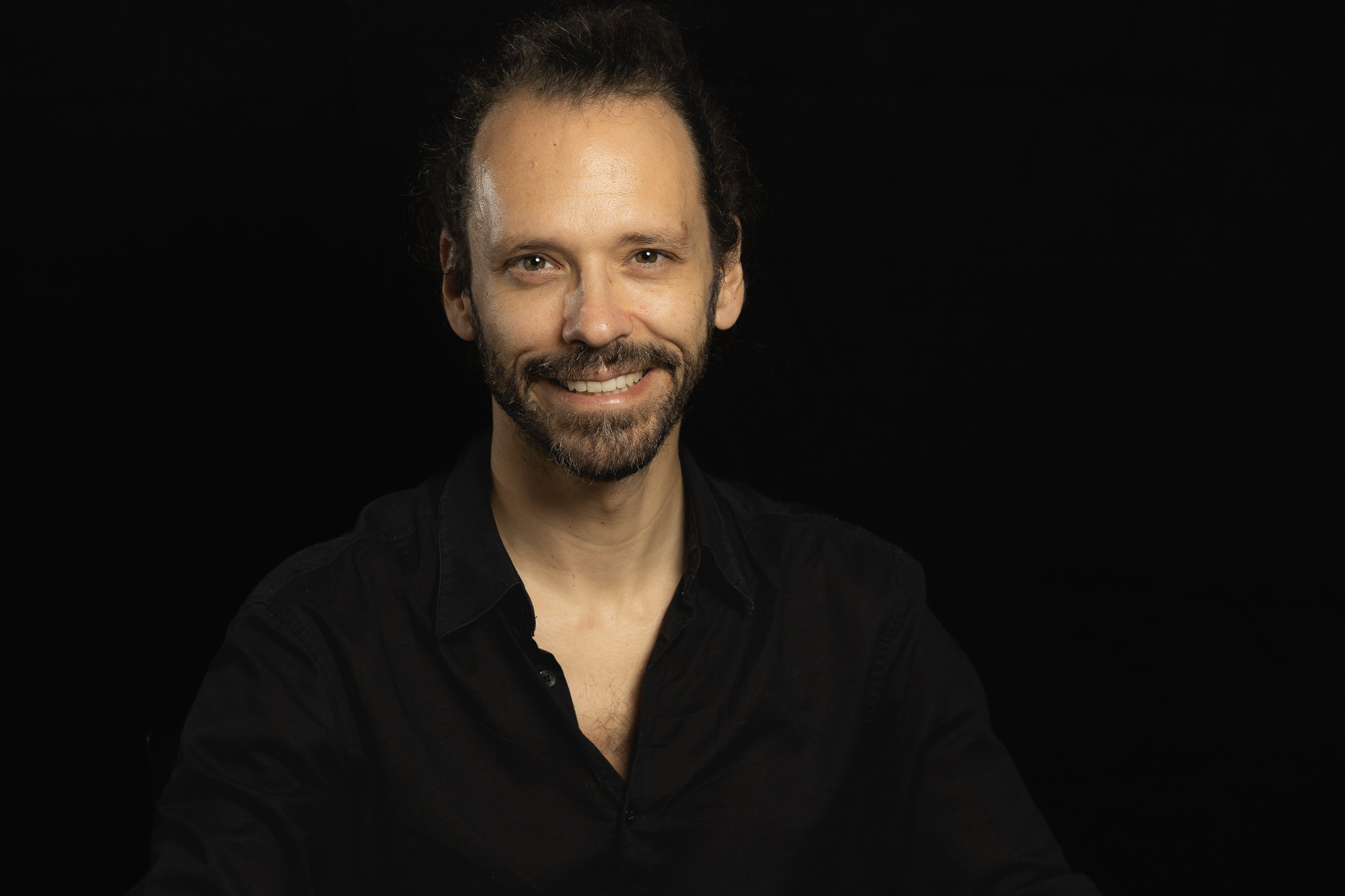
Gergely Neu is an ICREA research professor at Universitat Pompeu Fabra, Barcelona, Spain. He has previously worked with the SequeL team of INRIA Lille, France and the RLAI group at the University of Alberta, Edmonton, Canada. He obtained his PhD degree in 2013 from the Budapest University of Technology and Economics, where his advisors were András György, Csaba Szepesvári and László Györfi. His main research interests are in machine learning theory, with a strong focus on sequential decision making problems. Dr. Neu was the recipient of a Google Faculty Research award in 2018, the Bosch Young AI Researcher Award in 2019, an ERC Starting Grant in 2020, and an ERC Consolidator Grant in 2025.
Snigdha Panigrahi

Snigdha Panigrahi is an Associate Professor of Statistics at the University of Michigan, where she also holds a courtesy appointment in the Department of Biostatistics. She received her PhD in Statistics from Stanford University in 2018 and has been a faculty member at Michigan since then.
Her research focuses on converting purely predictive machine learning algorithms into principled inferential methods. By integrating tools from convex analysis, nonparametric theory and generative modeling, she develops novel inferential methods that advance explainable machine learning and trustworthy decision-making. She is an elected member of the International Statistical Institute, and her work has been recognized with an NSF CAREER Award and the Bernoulli New Researcher’s Award. Her editorial service, past and present, includes Journal of Computational and Graphical Statistics, Bernoulli, and Journal of the Royal Statistical Society: Series B.
Morgane Austern
 Morgane is an Assistant Professor of Statistics at Harvard University. She is also affiliated with the Center for Mathematical Sciences and Applications (CMSA) and the Applied Mathematics Department at Harvard. Sher earned her PhD in Statistics from Columbia University in 2019, where she worked under the supervision of Peter Orbanz and Arian Maleki. From 2019 to 2021, she held a postdoctoral research position at Microsoft Research New England. She received a Sloan Fellowship in 2026 and an NSF CAREER Award in 2025. In 2022, she was named a Kavli Fellow by the National Academy of Sciences.
Gert de Cooman

Gert de Cooman is a Senior Full Professor in Uncertainty Modelling and Systems Science at Ghent University’s Faculty of Engineering and Architecture (Belgium), and an Honorary Professor at the University of Bristol’s Department of Philosophy (UK) since 2023. He received his PhD from Ghent University in 1993 and has been a Visiting Professor at Durham University (UK) between 2014 and 2021.
He has done extensive research on the foundations of probability, and is mainly interested in imprecise probabilities (IP)—or in other words: inference and decision-making with partially specified probabilities—where he’s made a number contributions throughout the years (related to coherence, lower previsions, sets of desirable gambles, independence, exchangeability, predictive inference, algorithmic randomness, Markov chains, game-theoretic probability, laws of large numbers, choice functions, quantum probability, …). He is a founding member and erstwhile president of SIPTA, the Society for Imprecise Probabilities: Theories and Applications, and is currently writing a book on the foundations of his favourite research field.
Victor H. de la Peña
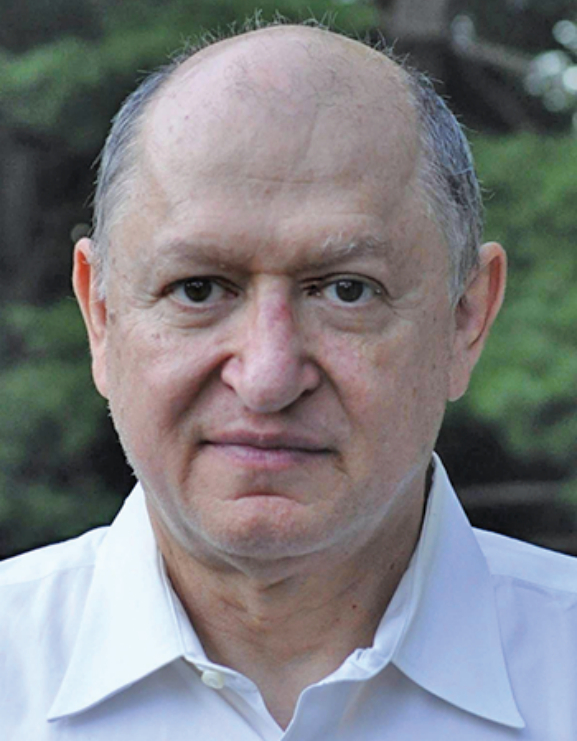 Victor H. de la Peña is Professor of Statistics at Columbia University, where he has served on the faculty since 1988. A Medallion Lecturer and elected Fellow of the Institute of Mathematical Statistics, he is one of the founding architects of decoupling theory and self-normalization in probability.
He is co-author with Evarist Giné of the standard reference Decoupling: From Dependence to Independence (Springer, 1999). His 2004 paper “Self-normalized processes: exponential inequalities, moment bounds and iterated logarithm laws” (with Michael J. Klass and Tze Leung Lai) was recognized as the most-read article in The Annals of Probability in September 2025. The methods introduced in this work have had lasting impact across probability and now underpin key developments in modern machine learning, including foundational algorithms for linear stochastic bandits (Abbasi-Yadkori et al., 2011) and anytime-valid confidence sequences.
Victor holds a Ph.D. in Probability from the University of California, Berkeley. He has held extended visiting positions at Stanford, Berkeley, Universities of Paris, Aarhus, Strasbourg, and other leading institutions, and currently serves as Associate Editor of Probability Surveys. He is a frequent invited speaker at major conferences and seminars worldwide.